Why Knee Pain Often Causes Lower Back Pain
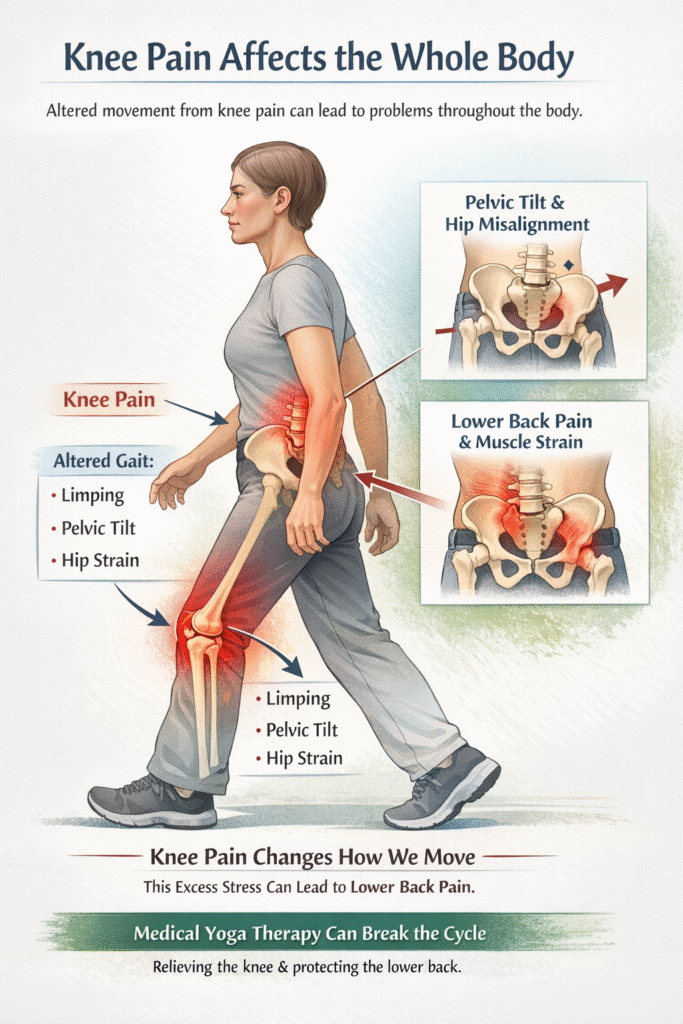
This is the heading CKnee pain doesn’t just stay in the knee. Our body works as a connected system, especially when we walk. Every step we take relies on smooth coordination between the foot, knee, hip, pelvis, and spine. When the knee becomes painful, this natural rhythm gets disrupted. To avoid pain, a person may limp, shorten their stride, or place more weight on one side. These changes affect how the hips and pelvis move. The pelvis may tilt or rotate differently with each step, creating an imbalance. Because the lower back sits directly on the pelvis, it must compensate for this uneven movement. Over time, this constant compensation causes the lower back muscles to overwork, leading to stiffness, fatigue, and discomfort. The spinal joints also absorb extra stress, which may result in ongoing lower back pain. In simple terms: Knee pain changes the way we move — and those changes can overload the lower back. Medical yoga therapycan break this cycle. Addressing the root cause not only relieves the knee but also helps protect the lower back.